Monday, February 28, 2022

MACEDONIA

Note: In February of 2019, Macedonia changed its name to North Macedonia.


READ


When I realized that the book I had purchased for Macedonia was a 490-page novel about conjoined twins, I wasn’t thrilled. For starters, that’s a lot of pages! And then there was the subject matter – it seemed to me that a story about twins who were joined at their temples could only end badly.

A Spare Life, written by Lidija Dimkovska and translated by Christina E. Kramer, certainly had its tragic moments, but it turned out to be much more readable than I had expected. The story follows the lives of conjoined twin sisters -- Zlata, who is the narrator, and Srebra – who were born in the Macedonian city of Skopje. The girls are twelve years old when the novel begins, so they have had many years to become accustomed to their situation. They live with their parents in a small house with few amenities and very little love. The girls don’t even like each other very much, as they must be with each other all the time and they never seem to want to do the same thing.

Zlata and Srebra have two friends, but the other children at school or in the neighborhood either tease them or ignore them. There is a lot of extended family – in fact, there are too many grandparents, aunts, uncles, cousins, and in-laws for me to keep track of – so the girls have some sense of community around them. But nothing really helps to ease the reality that they are stuck together and can never have any privacy.

When the twins go to high school, they each want to study different things, but that’s not possible, since they must attend the same classes. They end up studying what Zlata wants – language arts. But when they begin college, Srebra chooses their course of study, which is law. They become friends with some of their fellow law students, and then life becomes very complicated. Srebra and one of the students, Darko, fall in love. Zlata finds herself just inches away from every kiss and every caress between Srebra and Darko. Things become even more uncomfortable when Darko and Srebra get married, and the three of them have to share a bed. Eventually, they decide that they must come up with the money to go to London and see if they can find a surgeon who can separate them.

Juxtaposed against the sisters’ desire to be separated from one another is the struggle taking place in their region of the world. At the beginning of the novel, Macedonia is a part of Yugoslavia, along with several other constituent republics. However, these entities are pulling away and trying to obtain their independence. When Zlata and Srebra turn eighteen years old, they vote in favor of a referendum on Macedonian independence. The parallel between this vote and the sisters’ wish to be separated is not lost on Zlata: “When two whole republics could be separated from Yugoslavia, something that had been, up to that moment, the equivalent of science fiction, why couldn’t two heads be separated by a surgeon’s knife?”

There is so much more I could say about A Spare Life, but I don’t want to give anything away. It was a novel worth reading, both for the story and for the history lesson.

COOK

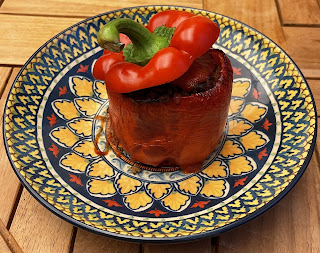
There were lots of food references in A Spare Life. Beans were eaten regularly, and for a while, I thought I’d be making a bean dish for this blog post. But then I read a passage about the foods that Zlata and Srebra’s mother cooked throughout the week, and found that Sunday was stuffed pepper day. That sounded a lot more interesting than beans, so I looked online and found a recipe for Macedonian Stuffed Peppers on the Iron Stronghold website. The only substitution I needed to make was to replace the ground beef with Impossible meat. This turned out to be a very tasty and very pretty dish.


GIVE

The GlobalGiving website listed three projects in North Macedonia, which meant I had to figure out how North Macedonia differed from Macedonia. Apparently, there was a dispute between the Republic of Macedonia and the Macedonian region of Greece as to the use of the name. So in 2019, the Republic of Macedonia changed its name to the Republic of North Macedonia.

At any rate, of the three projects listed at GlobalGiving, the one I chose was one giving trauma-informed care to orphans. North Macedonia has been working to move children out of orphanages and into foster care or group homes. This project will assist in this effort by providing: “1) Seminars in Trauma-informed Care for foster families and group home caregivers, and 2) Daily care for special needs orphans through The JOY Home Day Center, which will give 6 children support through therapies, attachment-centered play, and trauma-informed care.”

More information about this project is available at Give Trauma-Informed Care to Orphans in Macedonia - GlobalGiving.


NEXT STOP: MADAGASCAR


Saturday, February 5, 2022

LUXEMBOURG


READ


I was afraid I might have trouble finding a book from Luxembourg that had been translated into English. Ann Morgan, the woman who inspired this project, had a terrible time finding something to read from Luxembourg, and ended up reading an unpublished manuscript that had been sent to her by the author.

Fortunately, my Internet search turned up a link to Black Fountain Press, a Luxembourg publishing house that was established in 2017 for the express purpose of publishing works by Luxembourgish authors who are writing in English. There weren’t any novels on their website, but there was a book of short stories – On the Edge written by Black Fountain Press co-founder Anne-Marie Reuter. When I first contacted Anne-Marie about purchasing a copy of her book, the Covid-19 pandemic was raging in Europe and it was impossible to get the book shipped to me. When things opened up a bit, Anne-Marie was kind enough to send me a copy of On the Edge as a gift.

On the Edge is a collection of stories about people who have been pushed by life’s circumstances to a place far outside their comfort zones. Among my favorites:

·       “Stalking” introduces a man sitting in his car in a school parking lot. He’s unhappy about his divorce and his role as weekend parent, so he drives to the school every afternoon just to catch a glimpse of his children as they leave the building when classes are over.

·       “Ray for Raymond” is a cautionary tale about an accountant who is very concerned with appearances. But then he has to tell his wife and daughter that they have all been living beyond their means.

·       “Miss Gina” is a poignant story of an elderly housekeeper who has worked for the same family for years and whose happiest hours are those she spends at work.

·       One faux pas at a dance class in “Pas de Deux” causes a family to unravel.

The stories in On the Edge offer brief glimpses into the lives of a variety of characters, capturing a moment, a day, or, in some cases, many days as they wrestle with whatever it is that has pushed them to the edge. I enjoyed reading short stories for a change, with so much feeling packed into just a few pages. Many thanks to Anne-Marie for sharing her beautiful writing with me.


COOK


In searching online for a Luxembourgish dish to prepare, I found the Anne’s Kitchen website, which is chock full of Luxembourgish recipes. I decided to try making her Wäinzoossiss sausage rolls without, of course, using Wäinzoossiss sausage. I substituted Beyond Sausage Brats, used a puff pastry with no animal products, and brushed the tops with Just Egg thinned with almond milk. These turned out to be some pretty tasty little morsels, and so easy to make. 


GIVE


Since Anne-Marie had given me her book at no cost, I asked if she would like to recommend an organization in Luxembourg to receive my donation. She chose Stëmm vun der Strooss, which works with homeless people, the unemployed, low-income people, former prisoners, asylum seekers, immigrants, and people with mental disorders or drug/alcohol dependencies. They provide a variety of goods and services, including food, clothing, counseling, and medical care. More information about Stëmm vun der Strooss is available on their website or their Facebook page.


NEXT STOP: MACEDONIA


Monday, January 31, 2022

LITHUANIA


READ


I have begun to approach the books I read from Eastern Europe with trepidation – they are almost always dark and tragic. The book I chose for Lithuania was no exception. Breathing into Marble, authored by Laura Sintija Černiauskaitė and translated by Marija Marcinkute, tells the story of an adoption gone terribly wrong.

Isabel, an artist, lives in the Lithuanian countryside with her husband Liudas, who is a teacher, and their epileptic son Gailius. Isabel decides she wants to add to their family by adopting a child and she goes to an orphanage that’s run by her friend Beatrice. There, she sees a boy whose “eyes were brown, with irises that seemed as thick as steel – they had none of the softness that would be characteristic of a child.” In fact, “(h)ardness was probably his most distinctive quality; a grisly toughness.” With his eyes locked on Isabel’s, this six-year-old boy named Ilya puts a nail in his mouth and swallows it.

That should have given Isabel a clue as to the challenge she’d be facing if she adopted Ilya, and Beatrice tries to persuade her to take a different child. But Isabel’s response is, “I want him or none of them.”

Shortly thereafter, Isabel and Liudas take Ilya home, and their lives change for the worse. And while we never learn Ilya’s backstory, there is a great deal of information about Isabel’s life and the occurrences that made her the kind of person who would adopt a very troubled child.

In an interview, the author describes Breathing into Marble as “the tragic, poetic story of a family, in which there is everything: love, betrayal, childhood illness, unsuccessful attempts at adoption, alcoholism, abuse, murder, the inner conflict of a female artist.” Černiauskaitė says she was very young when she wrote it, and if she were writing it now, she probably wouldn’t fill it with so many traumatic problems. Even so, the book is beautifully written, and it won the European Union Prize for Literature in 2009.

If there is a bright spot to this novel, it is the personal growth that Isabel experiences in the face of all the terrible things that happen to her. The book’s ending doesn’t tell the reader exactly what Isabel will do next, but one is left with the impression that she will be strong enough to deal with whatever is ahead.


COOK


No interesting dishes presented themselves in Breathing into Marble, so I searched the Internet for an appropriate recipe. I found a vegan recipe for a potato dish called kugelis on the Vegetaristan website. Basically, it's shredded potatoes, with flour and herbs added. I thought it would be a very nice accompaniment for the Impossible meatloaf I was making for dinner.

I was wrong -- it was terrible. I don't know if the recipe is at fault, or if I did something wrong, but it was not good. The Impossible meatloaf was great, though!


GIVE


There were five Lithuanian projects listed at GlobalGiving. None of them were particularly relevant to the subject matter of the book, so I just chose the one that appealed to me the most – helping a food bank purchase a minivan so they can collect surplus food from grocery stores, warehouses, and farms to distribute to people in need.

According to the project description: “Food is too precious to be a waste. It costs a lot of money, natural resources and a great deal of damage to the planet. It is even more precious when you realize that every fifth person in Lithuania is struggling to have a nutritious meal every day.” With a new minivan, an additional 500 to 700 tons of food can be saved and given to those who need it.

More information about this project is available at 500 t of food: saved from wasting, given to poor - GlobalGiving.


NEXT STOP: LUXEMBOURG


Thursday, January 20, 2022

LIECHTENSTEIN


READ


One of the fun things about writing this blog has been the hunt for books from every country. I wouldn’t have expected to have so much trouble finding a book from the tiny European country of Liechtenstein, where there was no shortage of authors. Unfortunately, I couldn’t find anything that had been translated into English.

Luckily, Lillian and Henriette, who write the Stories of the World blog, came to my rescue. They had discovered a book of poetry, Of Things, written by Michael Donhauser and translated by Nick Hoff and Andrew Joron. After they wrote about it for their blog, they kindly sent it along to me. Many thanks, Lillian and Henriette!

I have to say, though, that poetry just isn’t my thing, and these poems in particular really did not appeal to me. The theme that binds all the poems in this book is nature, which seems like a lovely topic for a book of poetry. But the fourteen-page poem about a manure pile that appeared early in the book was not the type of nature-writing I was expecting. I kept hoping it was a metaphor for something else, and there were occasional metaphorical bits in the poem, but mostly, it truly was a poem about an actual manure pile. Long passages from Johann Heinrich Zedler’s Great Complete Universal Lexicon were thrown in here and there, which seemed rather un-poetry-like to me.

There were things I could relate to in a few of the other poems. In “The Marsh Marigold,” for example, the poet describes the beauty of a marsh and meadow – “Yellow-topped with buttercups. White-topped with meadow chervil.” – and laments that it will be built over with apartment complexes. And in “The Larch Forest,” he speaks briefly of love: “The names of flowers as proofs of love. ‘There is no such thing as love, only proof of love.’” Donhauser’s poem, “The Gravel,” (and yes, it’s a thirteen-page poem about actual gravel), contains a political reference – “The crushing of the resistance movement in China colors the gravel.” It also has a nice passage, more prosaic than poetic, about time spent as a child at his grandmother’s home in Eschen.

With more and more readers looking to read books from other countries, I hope that in the not-too-distant future, there will be more options available in translation from Liechtenstein. 


COOK


If the book I read for Liechtenstein was a disappointment, the dish I made for this blog post was decidedly not. I searched the Internet for a suitable recipe and found a wonderful dish on the International Cuisine website called Liechtensteiner Pfannkuchen, which apparently translates as pancakes with compote and berries. Basically, it’s crepes layered with raspberry preserves and topped with berries. I veganized the recipe by using oat milk and Bob’s Red Mill egg replacer, and it was delicious. The website says it’s a dessert, but I had it for breakfast, and then I had seconds. Does anyone know how to say “yum” in Liechtensteiner?


GIVE


Finding an organization for my donation wasn’t easy. There were no projects listed for Liechtenstein on the GlobalGiving website, and it took a long time for my Internet search to turn up anything. Finally, I found the Make-A-Wish Foundation of Switzerland & Liechtenstein. As with Make-A-Wish organizations everywhere, the purpose of this organization is to grant “the most heartfelt wishes of children aged between 3 and 18 living with a serious medical condition to give them Hope, Strength and Joy.”

Some of the wishes they’ve granted have been: “Getting tips from Roger Federer, panning for gold, flying over the Alps in a helicopter, seeing the sea for the first time, meeting a celebrity hero, being a Chef for a day, or meeting a Nobel physicist at Cern.”

More information about the Make-A-Wish Foundation of Switzerland & Liechtenstein is available at Make-A-Wish Foundation of Switzerland & Liechtenstein: MAW (makeawish.ch).


NEXT STOP: LITHUANIA


Saturday, October 30, 2021

LIBYA


READ


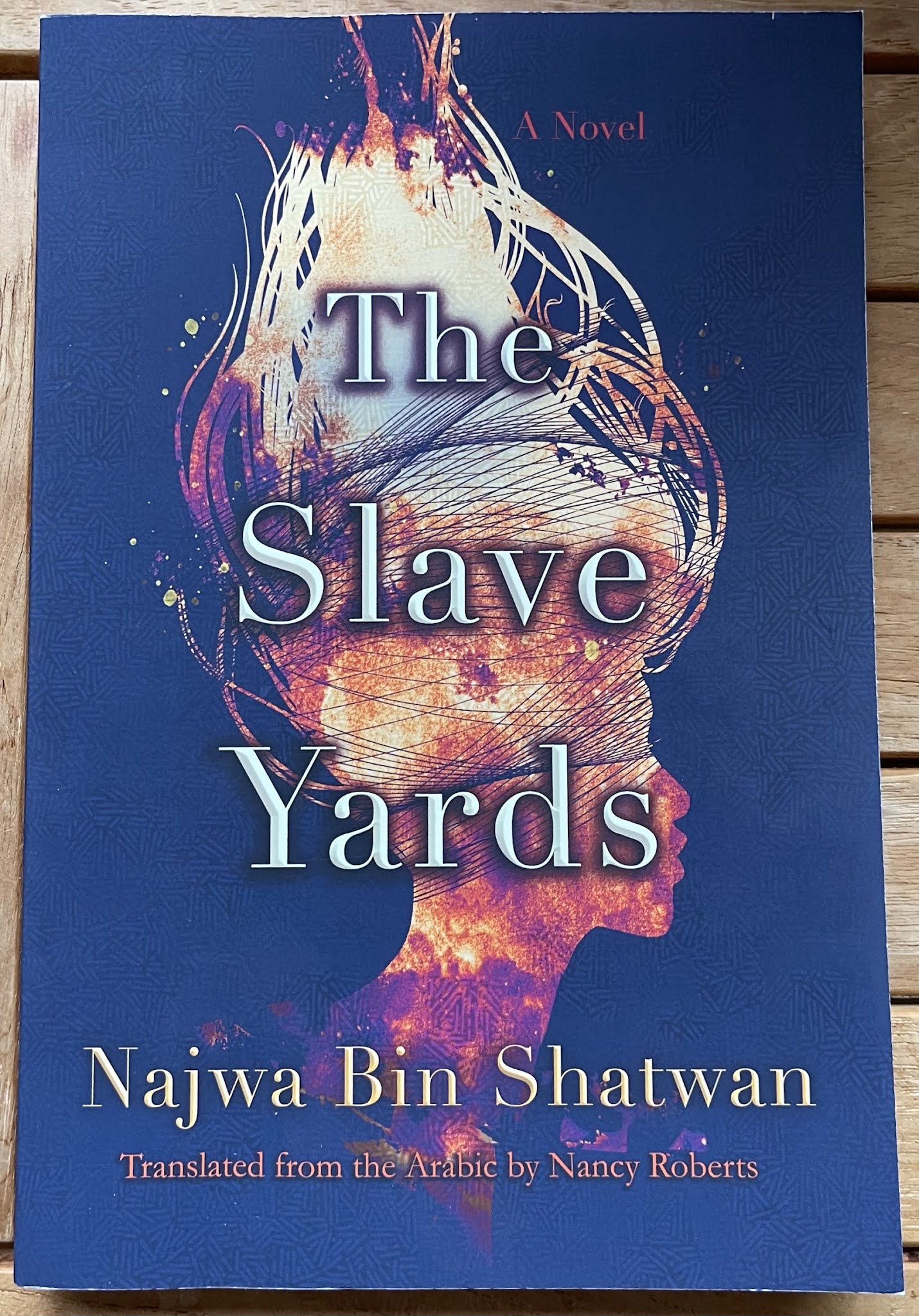
The Slave Yards, written by Najwa Bin Shatwan and translated by Nancy Roberts, tells the story of two women. Atiga is a happily married doctor’s assistant, the daughter of a slave and a slavemaster. Tawida is her long-dead mother. The book opens with a visit to Atiga from a man named Ali, who says he is her cousin, the nephew of her father. He has always known of her father’s love for her mother, and he has come to give Atiga her birth certificate, in which her father Muhammad claims paternity. Ali, who appears to have a terminal illness, is also working to obtain Atiga’s rightful inheritance for her.

The first part of the book recounts Atiga’s childhood growing up in the Slave Yards, an encampment near the city of Benghazi. Slaves in Libya had been brought by caravan “from the Niger River basin, the Sudan, Chad, Mali, and wherever they found black people who were hungry and destitute, victims of tribal wars and sultans’ insatiable greed.” Atiga lives with her Aunt Sabriya and Miftah, a white boy whose origin is unknown to everyone except Aunt Sabriya. By virtue of her parentage, Atiga is lighter-skinned than most of the people in the Yards, but it doesn’t seem to matter to the other inhabitants. She works alongside other children her age shifting sand at the seashore for construction workers. 

This section of the book is full of stories about life in the Slave Yards – the work people do to survive, the friendships that grow among the inhabitants, and the customs and rituals that are observed, such as the locking ceremony that is performed on girls to ensure that they won’t have sex until they’re married. It is said that “[t]he motto you had to live by in the Yards was: only trust in the bad things, since they’re the ones most likely to come true.”

Atiga is befriended by a young man named Yousef, who keeps an eye on her during her years in the Slave Yards. When tragedy strikes and Aunt Sabriya dies, Yousef takes Atiga to the Josephite Mission Center, where she is cared for and given an education. Later, she and Yousef marry.

The second part of the book tells the story of Atiga’s mother Tawida, who is a slave in the home of a wealthy merchant family. She catches the attention of Muhammad, the son of the slave owner, and he becomes obsessed with her to the point that he won’t even have sex with his wife anymore. While Muhammad’s family doesn’t care that he’s having sex with a slave, they are very concerned that he has developed such deep feelings for Tawida that he is neglecting his duty to his wife and daughters.

The growing consternation of Muhammad’s parents makes life much harder for Tawida, as they find ways to ensure that she aborts or miscarries every time she becomes pregnant. They try to marry her off to another slave and they try to sell her. They send Muhammad away on family business for longer and longer periods of time, but they are unable to end the relationship between the two.

At the end of the book, Ali talks to Atiga about how Italy colonized Libya early in the twentieth century, putting new laws into effect that basically ended Libya’s system of slavery. Atiga tells him: “I’m slavery’s final way station, where slave caravans stopped to rest for the last time, where ‘white’ and ‘black’ blood circulate and mingle in my veins. I was formed out of everything: out of slavery and freedom, water and salt, degradation and dignity, humiliation and honor, sun and soil, hunger and satiety.”

The Slave Yards was interesting and informative, with characters that will stay with me for a while. But the descriptions of the brutality endured by Tawida and other slaves made the book very hard to read at times. This book is a stark reminder that the purpose of literature isn’t only to entertain, but to occasionally take us outside of our comfort zone and force us to confront the harsh realities of life faced by other people in other places.


COOK


There were several dishes mentioned in The Slave Yards that were vegan or could have easily been made vegan, but none of them particularly appealed to me. So I searched the Internet and found a recipe for Libyan imbakbaka on the Fig & Olive Platter website. Imbakbaka is basically the Libyan version of minestrone soup, influenced by the Italian colonization of Libya between 1910 and 1947. Like Italian minestrone, this tomato-based soup is full of vegetables and pasta. However, the seasonings are different, with the recipe for imbakbaka calling for cinnamon, turmeric, chili powder, and paprika. It was actually quite good, and perfect for the cooler fall temperatures we’re experiencing in Northern California.


GIVE


There were two projects listed for Libya on the GlobalGiving website, and I decided to donate to both of them.

The first project will seek justice for migrants passing through Libya who “are routinely subjected to widespread human rights violations including torture, forced labour and sexual violence.” That’s right – slavery has returned to Libya. According to one news account, there are even slave markets periodically in Tripoli. The justice system in Libya is currently broken, making it difficult to hold the perpetrators of these human rights violations accountable. The group Lawyers for Justice in Libya hopes to “document the cases of migrants that have experienced violations in Libya, work to obtain justice using international human rights mechanisms such as the African Commission on Human and Peoples’ Rights and the International Criminal Court, and facilitate psychological and medical rehabilitation for the victims.” More information about this project is available at Routes to Justice for Migrants in Libya - GlobalGiving.

The second project helps “develop and support young women, girls and youth in Libya by using sport as an active learning tool around issues of social cohesion, health and reconciliation.” These are self-awareness and assertiveness; communication and negotiation skills; confidence; appreciation of difference and respect; commitment to balancing personal liberties with social responsibility to others; and a sense of belonging to a group or polity.” More information about this project is available at Sports for All - GlobalGiving.


NEXT STOP: LIECHTENSTEIN


Saturday, October 9, 2021

LIBERIA


READ


Heart Men, by Ophelia S. Lewis, is the story of the Douglas family. Senator Robert Jenkins Douglas II, his wife Katharine, and their adopted son Razaq live in Liberia’s capital, Monrovia, and their son RJ and daughter Mellody live in the United States. RJ is a successful lawyer, and Mellody is a doctor who spends her vacation and holidays volunteering at a hospital in Monrovia. Everything seems to be going well for all members of the family until Senator Douglas is arrested and charged with ritualistic murder.

Ritualistic murders have plagued Liberia for a long time, and they continue to this day. They involve murder in order to harvest body parts, mostly for occult purposes, or juju. The alleged role of Senator Douglas in this crime was to loan his car to a friend, who then used it to carry out the murder. The family gathers in Monrovia, and RJ joins with his father’s attorney to help with his defense.

The ritualistic murders aspect of the novel is the hook the author uses to draw readers in, but people’s interactions with one another on a daily basis are the main focus of the book. The sexual exploitation of women appears to be a major problem in Monrovian society. RJ is shocked to learn that his own father is in the habit of paying the school fees for young girls and then taking advantage of his power over them to force them to have sex with him. 

I didn’t find much to admire in Heart Men, but there were a couple of chapters that stood out for me. In the first instance, after the trial of Senator Douglas is concluded, RJ and his girlfriend Gia travel to a village outside Monrovia to meet the family of Johnny Bono, the man who was killed in the ritualistic murder. They offer their condolences, and ask Johnny’s father to tell them all about his son and what his hopes and dreams had been. After he has shared his memories of his son, RJ and Gia offer him money to help fulfill Johnny’s dreams for his family. While this could have been perceived as a payoff of some sort, the fact that RJ and Gia listened respectfully while Johnny’s father poured out his heart to them helped to take the taint away from the money they offered.

The other chapter I found meaningful is one in which Gia, who works as a psychologist in the United States, speaks at a gathering of women at the church the Douglas family attends. The women share their painful stories about how sexual crimes and exploitation have affected them. Gia listens to their horrifying experiences with empathy and tact, and responds with advice about loving themselves and finding meaning in their lives.

COOK

Since the Douglas family in Heart Men is both Liberian and American, the foods they eat tend to be a combination of the two cuisines. One Liberian dish that seems to grace the table at every one of their celebratory meals is jollof rice, a combination of rice and vegetables. It usually contains meat, but when I made jollof rice from the recipe I found on the Frank Theatre website, I left out the meat and the meat stock. It was a good, simple dish, and I can understand why the Douglas family liked it so much.


GIVE 

It was clear to me after reading Heart Men that the organization I would donate to for this blog post would be one that helps women or girls. On the GlobalGiving website, I found a project that makes it possible for girls from one of the largest slums in Liberia to receive a free quality education. According to the project description: “Quality education in Liberia is elusive for most children. Only 44% of children attend primary school, and many who complete primary school graduate unable to read a single sentence. For girls, rates of education are even worse, exacerbated by sexual abuse, harmful cultural practices, and early pregnancy.”

At Hilltop School, 260 girls from kindergarten through ninth grade are provided with “high quality education, two meals per day, medical care, extracurricular activities, psycho-social support, menstrual and sexual health education, and family planning.” More information about this project is available at Provide Safe School for Girls in Monrovia, Liberia - GlobalGiving.


NEXT STOP: LIBYA


Sunday, September 12, 2021

LESOTHO


READ


Most of the books I read for this project are relatively contemporary, but that’s not always an option. For Lesotho, a country that is surrounded on all sides by South Africa, the only book I was able to find was Chaka, written by Thomas Mofolo and translated by Daniel P. Kunene. Chaka, which was published in 1925, is a fictionalized account of the life of Shaka, who founded the Zulu Empire and ruled from 1816 to 1828.

Chaka is conceived out of wedlock by Senzangakhona, King of Mazulu, and Nandi, a local beauty. They marry when they learn that Nandi is pregnant, but the fact that Nandi was pregnant before they got married would be a scandal, if word got out. Senzangakhona has three or four other wives, but none of them have produced a son, so Chaka and his mother are tolerated initially. However, when the other wives begin to bear sons, they threaten to expose the scandal surrounding Chaka’s birth unless Senzangakhona agrees to disinherit Chaka and expel him and Nandi from the royal home. Senzangakhona does as they ask.

As an outcast, Chaka endures a miserable childhood, getting attacked regularly by other children. That ends when his mother takes him to a medicine woman, who gives him potions that make him stronger and more aggressive than everyone else. When he begins to perform feats of strength and daring that none of the other men or boys in the village can do, the women all start to sing his praises. This upsets the men, of course, and they plot to kill him, so he flees the village. Disillusioned with how he is being made to pay for the sins of his parents, Chaka, who had been a pretty decent guy until that point, vows to be his own man and do whatever he wants to do from that point on.

After he leaves his village, he meets a healer, Isanusi, who gives him strengthening medicines to make him a great warrior and a great king. He leads him to the kingdom ruled by Dingiswayo, where Chaka’s talents are immediately put to use. Chaka’s new philosophy is: “I shall simply kill whomever I wish to kill, whether he is guilty or not, because that is the law of this world. I will never have mercy on a person simply because of his pleadings.” When Dingiswayo is killed in battle and Chaka becomes king, he continues to rule with that philosophy and kills people, both in his own kingdom and in others, at an alarming rate. He expands his territory by laying waste to village after village, burning the fields and killing most of the people except for the young men who are forced to join his army. In this way, he builds the great Zulu Empire until karma finally catches up with him.

As much as his childhood lays the groundwork for the man Chaka becomes, the medicine man, Isanusi, influences him greatly in the path he chooses to follow. Isanusi reminds him often that his power depends on continued bloodshed, and that he must sacrifice those he loves the most in order to be an even greater king than he can imagine. Greed, power, and bloodlust become the motivating factors in his life.

Chaka wasn’t a particularly enjoyable book to read, but it accomplished one of the purposes I had in mind when I started this blog – to help fill in some holes in my education and in my understanding of the world.

COOK


Chaka didn’t provide any help in figuring out a dish to cook for this post, so I went to the Internet. In an article about what to eat in Lesotho, I found a dessert called makoenva, which is basically deep-fried dough balls with raisins, rolled in cinnamon sugar. The International Cuisine website had a recipe that was vegan without needing any adjustments. The makoenva turned out really, really well. I mean, everyone likes fried dough with sugar, right?


GIVE

Reading about Chaka’s conquest of other kingdoms and the wreckage that he left in his wake made it sound like a big part of his legacy was creating an environmental wasteland. So when I looked at the two projects in Lesotho that were listed on the GlobalGiving website, I chose the one that looked like it would help the most people with the least environmental impact. Onepower Lesotho is working to manufacture affordable solar energy technology in rural areas of Lesotho to help power health clinics, schools, and businesses. This project will also create good job opportunities for people who might otherwise have to move to the cities to find work. More information about this project is available at: Solar Jobs & Energy - Village Minigrids in Lesotho - GlobalGiving.


NEXT STOP: LIBERIA